
Training Support Workers in the NDIS:
why ensuring staff connection is important

Providing high-quality disability Support starts with high-quality training. After all, how are your support workers supposed to simply know what is what on their first day of work? They may have excellent foundational knowledge and several years of experience under their belt, but every workplace is different so investing time into cementing a strong and unified work culture is vital.
As a registered NDIS provider in Cairns, it’s crucial to us that our Support Workers feel valued, prepared, and confident when taking care of our participants. Ticking all the NDIS compliance boxes is non-negotiable. However, effective staff training is about so much more than simply ticking boxes – it’s about building staff connection.
Here, we delve into why ensuring staff connection when training NDIS Support Workers is so important and how this can be done effectively.

From Induction to ongoing Development
Training Support Workers should not end once they have completed an induction and a few buddy shifts – in fact, this is only the start. The induction process should help to paint a clear picture in the mind of the Support Workers what company values are, its policies, and the general organisational expectations, but this alone is not enough to secure a stable workforce. Approaching the ongoing development of staff training will be the make or break of a unified team creating Support Workers that participants and their families can rely on.
So, how do we contribute to the ongoing development of Support Workers?
Supervision and Mentoring
Regular supervision and mentoring are a good place to start. By delegating supervision shifts to team leaders or senior staff members who know the NDIS practice standards and ins and out of the business is an effective vocational-style approach to identifying strengths and areas for improvement whilst keeping it relevant, and person centred. Not everyone does well in formally arranged meetings, so conducting supervision shifts allows staff members to show you their true capabilities and helps to gain a more accurate understanding of how support workers are taking care of your participants first-hand. Following this up with a one-on-one conversations to reflect on the current job performance is an effective way to get to know the support worker better and find out where their strengths and weaknesses lie. Establishing work practices that demonstrate genuine care for the professional development of Support workers is vital to make a team feel valued and connected.
Team Talk
Other than the individual development of Support Workers, allocating time for team discussions can be a great way for support workers to communicate directly with each other and gain a deeper understanding into their personal concerns or contributions they would like to make. Additionally, this can help to unify a workforce and outline any discrepancies in how care for participants is being carried out. Consistency is the key to providing successful supports, so hosting regular team meetings will help to iron out any inconsistencies that might otherwise have been missed.
Specialised Training Days
Speaking of hosting, allocating time to train Support Workers in particular areas of their job role should be placed as a priority. Perhaps a participant has recently been provided new AT equipment to use in their home. To help ensure the team is educated and informed on how to correctly assist the participant with using the equipment, organise a manual handling refresher course. That way, support workers will have a shared understanding of the do’s and don’ts, helping to provide consistent care to participants.
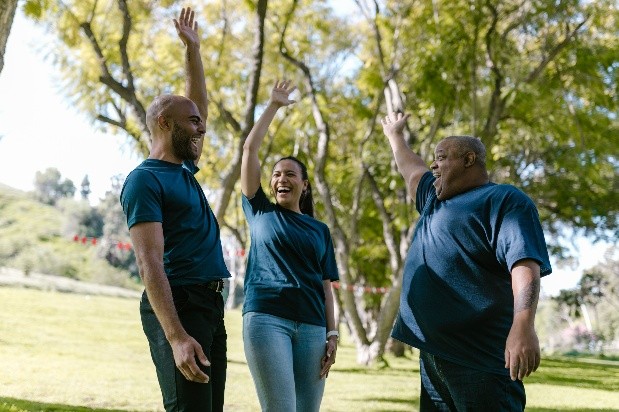
But why does staff connection matter so much?
But why is staff connection so important? You might ask. Staff training can provide the foundational knowledge for the job, but it is through building staff connection that helps them understand how to utilise this knowledge well. Support workers spend a lot of their day providing support alone which can become rather isolating at times. Therefore, implementing practices that make them feel supported , part of a team and a unified workforce is essential to keep morale high and to prevent feelings of isolation. Regardless of the industry, a workforce that organises opportunities for employees to connect is more likely to share knowledge, iron out any issues or concerns, and overall learn from each other.
But why else does it matter?
To ensure participant-centred support is backed up by a strong team
When staff connection is achieved, the benefits of this extend to more than just the organisation and workforce, but to participants too. The core aspect to support work is to help participants live as independently, safely, and comfortably as possible – but how effective your support team are at achieving this all starts internally. The NDIS workforce disability framework stresses the important of ensuring choice and control, understanding participant expectations, helping participants speak up, and for support workers to build good relationships. None of this is achievable without a strong and unified team who have a thorough understanding of their participants and the role each support worker plays in providing consistent participant-centred support.
To create a Culture of constructive criticism – not just criticism
How comfortable support workers feel to ask the ‘what, why, and how’ questions that might come up during their day is a good indication of how open and approachable of a workforce culture there is. No one should feel scared to speak up if they have a question, and they should not be made to feel incompetent for not understanding something. If support workers think they are going to be scrutinised for asking a question and feel they don’t have a good enough relationship with their team mates to speak up, this could lead to assumptions being made regarding how to provide care for their participants. Ultimately, assumptions can lead to poor choices and poorer care.
The NDIS Quality and Safeguards Commission outline it is the Support Providers responsibility to ensure their staff members have the adequate training necessary to perform their duties and provide the appropriate care for participants. However, consolidating a strong workforce culture and building staff connection is something that is unique to every support provider in cairns, and the importance of doing so should not be overlooked.